Somewhere along the way, we learned that a “good” yard is a quiet one. One that behaves. One that looks like it’s been handled. Leaves raked. Edges trimmed. Nothing lingering too long or growing in a direction we didn’t explicitly approve.
And on the surface, that feels like care. Responsibility. Maintenance. Being a good homeowner. A good neighbor. A good adult.
But the more I’ve learned about how ecosystems actually work, the more I’ve realized that this version of “care” isn’t doing nature any favors.
Nature doesn’t really thrive in constant correction. It thrives in layers. In leftovers. In things piling up slowly over time.
That’s where the idea of a wild corner comes in – as a quiet shift in how we think about what our outdoor spaces are for.
What is a "wild" corner?
When I say “wild corner,” I’m not talking about abandoning your yard or letting it spiral into something that stresses you out every time you look at it. I’m not talking about ignoring safety, or pretending that everyone has the same space, time, or flexibility.
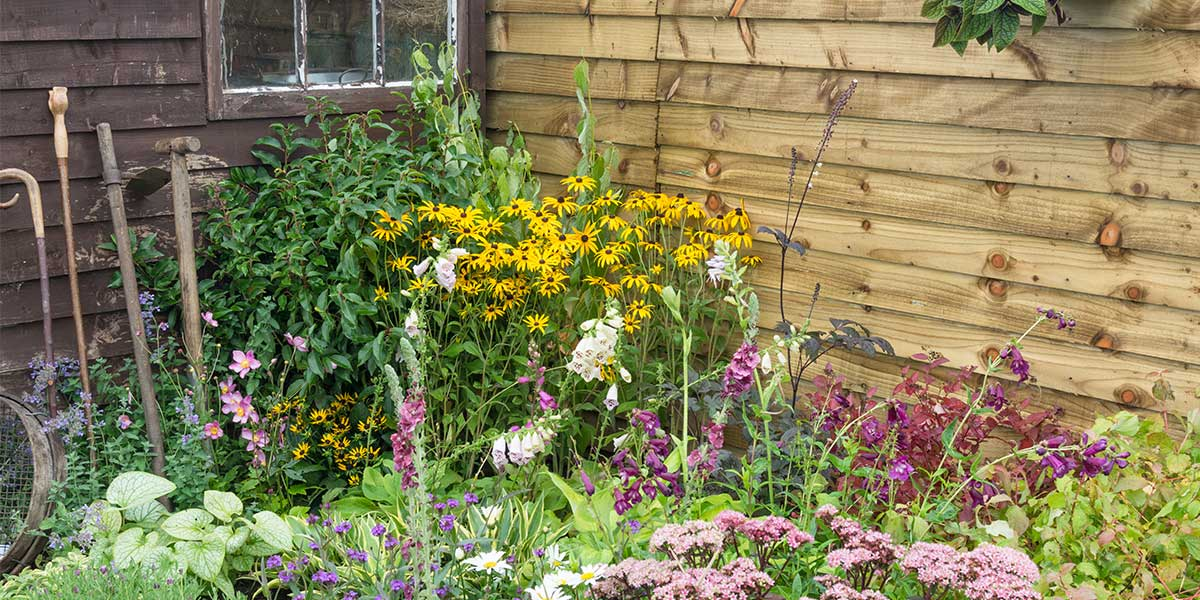
I’m talking about choosing one small area – maybe a corner along a fence line, under a tree, behind a shed, or along the edge of your property – and intentionally deciding not to micromanage it.
A place where leaves are allowed to fall and stay.
Where plant stems aren’t cut back the second they fade.
Where sticks and branches aren’t automatically seen as debris.
Where a fallen log doesn’t immediately get labeled a problem to solve.
It’s less about what you add, and more about what you stop removing.
The Problem With “Clean” Yards
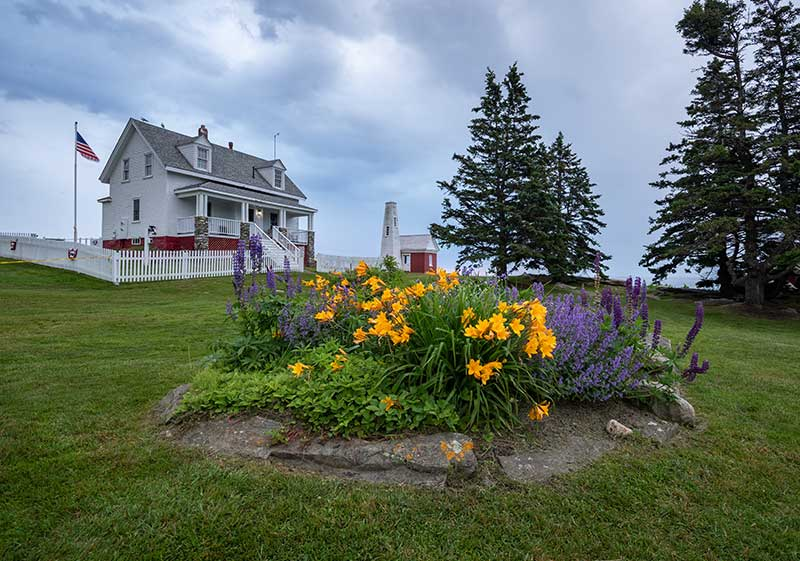
From a human perspective, a clean yard feels peaceful. Predictable. Finished.
But according to the National Wildlife Federation, the very things we’re most likely to remove – leaf litter, brush piles, dead plant material – are essential components of wildlife habitat. These materials provide shelter from predators, insulation from extreme temperatures, nesting material, and safe places for animals to rest, hide, and reproduce.
When we strip those things away, we don’t just make our yards look different. We fundamentally change what they can support.
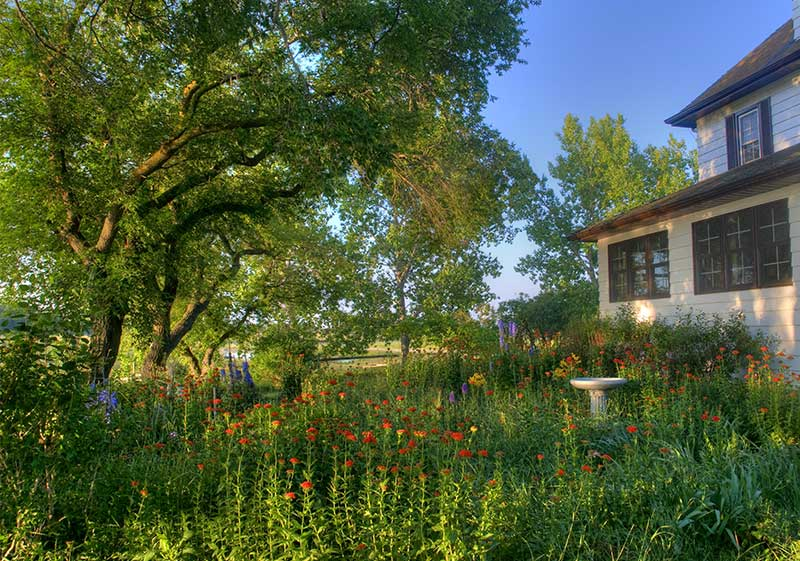
And this is especially true in suburban and urban areas, where natural habitat has already been fragmented into smaller and smaller pieces. In those environments, backyards aren’t just decorative. They’re connective tissue.
Insects Needs Wild Corners
Leaves are probably the best example of this disconnect.
We’ve been trained to see fallen leaves as clutter, something temporary that needs to be dealt with before it gets out of hand. But ecologically speaking, leaf litter is one of the most important layers in a healthy landscape.
The Xerces Society for Invertebrate Conservation explains that countless insects rely on leaf litter to survive the winter. Native bees burrow beneath it. Firefly larvae live and hunt within it. Caterpillars pupate there, waiting months before emerging.
When we rake and bag leaves, we’re not just removing organic material. We’re removing future life, often without ever realizing it.
And because insects sit at the base of the food web, those losses ripple outward. Fewer insects means fewer birds. Fewer birds means fewer seeds dispersed. Fewer plants means even less habitat.
It’s a chain reaction that starts with a rake.
Birds Need Wild Corners
Birds are often the first animals people notice disappearing, even if they don’t connect it to yard practices.
The Cornell Lab of Ornithology and the Audubon Society both emphasize how heavily birds depend on insects, especially during breeding season. Even species we think of as seed-eaters rely on caterpillars and other soft-bodied insects to feed their chicks.
A yard that looks pristine to us may feel eerily empty to a bird trying to raise young.
A wild corner, on the other hand, a place with leaves, stems, insects, and cover, becomes a resource. Not a guarantee, but a possibility. A place where life can still happen.
Pollinators Need Wild Corners
Pollinators are often talked about in terms of flowers, but flowers are only part of the picture.
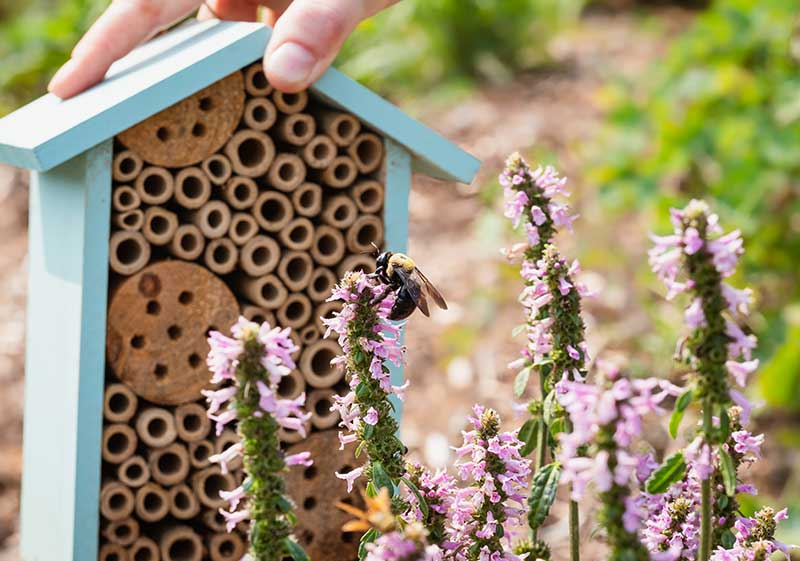
According to Pollinator Partnership and Xerces research, many native bees don’t live in hives at all. They nest in bare ground, hollow plant stems, and undisturbed debris. When we mulch heavily, cut everything back early, or keep soil constantly covered, we eliminate those nesting sites.
A wild corner provides continuity, a place that doesn’t reset every season. Somewhere pollinators can overwinter, emerge, and complete their life cycles without being erased halfway through.
The Aesthetic Fear (Which Is Real, Let’s Be Honest)
This is usually where the resistance shows up. Not because people don’t care, but because they do – about their homes, their neighborhoods, and how things are perceived.
The good news is that wild doesn’t have to mean thoughtless.
The National Wildlife Federation actually recommends framing wild areas intentionally; keeping them contained, edged, or visually distinct, so they read as purposeful rather than forgotten.
One wild corner. Clear boundaries. The rest of the yard still maintained.
It’s not about rejecting order entirely. It’s about making room for something else alongside it.
what this looks like in practice
Having a wild corner doesn’t require a full lifestyle shift. It doesn’t require a rebrand of your entire yard.
It can start with something as simple as:
- Leaving leaves in one area instead of bagging them
- Skipping fall cleanup along a fence or tree line
- Letting plant stems stand through winter
- Stacking branches instead of discarding them
- Placing a log where it won’t be disturbed
- Adding a native plant nearby and letting it do its thing
None of this has to be perfect. Or complete. Or impressive. Nature doesn’t need grand gestures. It needs consistency and restraint.
It’s easy to assume that if you don’t have acres of land, what you do doesn’t count. But according to the U.S. Fish & Wildlife Service and The Nature Conservancy, small patches of habitat, especially when they exist within developed areas, collectively make a measurable difference.
Backyards, balconies, and shared green spaces can act as stepping stones for wildlife moving through fragmented landscapes.
a different definition of care
We’ve been taught that care looks like control. Like constant intervention. Like making sure nothing ever looks out of place.
But ecosystems don’t need to be controlled. They need to be trusted.
Leaving a corner of your yard wild isn’t laziness. It’s restraint. It’s choosing not to interfere when interference isn’t necessary.
It’s acknowledging that life knows how to take care of itself…if we let it.
Sources & Further Reading
National Wildlife Federation – Backyard Wildlife Habitat
https://www.nwf.org
Xerces Society for Invertebrate Conservation – Leave the Leaves
https://xerces.org
Pollinator Partnership – Pollinator-Friendly Practices
https://www.pollinator.org
Cornell Lab of Ornithology – Bird Habitat & Insect Decline
https://www.birds.cornell.edu
Audubon Society – Bird-Friendly Communities
https://www.audubon.org
U.S. Fish & Wildlife Service – Urban Wildlife Habitat
https://www.fws.gov
The Nature Conservancy – Habitat & Biodiversity
https://www.nature.org